

286 The Blurred Path: When Empire Adopts the Language of Kingdom
On Pagan Patterns, Hebrew Distinction, and the Slow Erasure of a Set-Apart Faith

Good morning, and hello friends.
Early on in my walk when I had my initial kairos moment, I met a couple. They had large dogs too, so I felt very comfortable letting my dog Wiggles play with their three large breed dogs. The husband self-identified as a pagan and the wife was muslim. Now in those days, apart from the pagan motorcycle club, I didn’t know what a pagan was. A curriculum that Father would later take me through. At any rate, as I look back in those days, the pairing became awfully odd to me. Now, there is much more to how that relationship evolved over the subsequent months, but that is not the point of this article. The point of this article is how Yahuah felt about the pagan worship traditions of those biblical days versus what he wanted for His chosen people, the Hebrews.
The other morning, while reading through the Prophets, a pattern in the ancient world struck me with fresh force. In biblical days, most nations were pagans. Their worship had a familiar, syncratic shape: a father god, a mother goddess, a divine son. The names changed with the language, but the icons were consistent.
Our God, Yahuah, the God of Abraham, Isaac, and Jacob, commanded something radically different. He chose a people, the Hebrews, to be set apart. His first instruction was often, “Do not learn to follow the abominable practices of those nations” (Deuteronomy 12:29-31). His worship was not to resemble theirs. His name, Yahuah, was singular, unchanging, and holy.
But then came the empire builders. The councils. The “important” men making declarations, as I wrote about in “The Covenant and the Con: When Empire Poses as Kingdom.” Whether through malice or ignorance, they began to homogenize. Pagan holidays were rebranded. The titles of empire gods became titles for the Kingdom’s God. Names were changed. Words were gradually, over generations, redefined.
The result is the spiritual landscape we inhabit today. Pagans, Gentiles, and followers of The Way can, from the outside, all look the same. We share holy days, titles, and theological language that has been filtered through a Hellenistic sieve. The holy days of the empire become the Holy Days of the Kingdom.
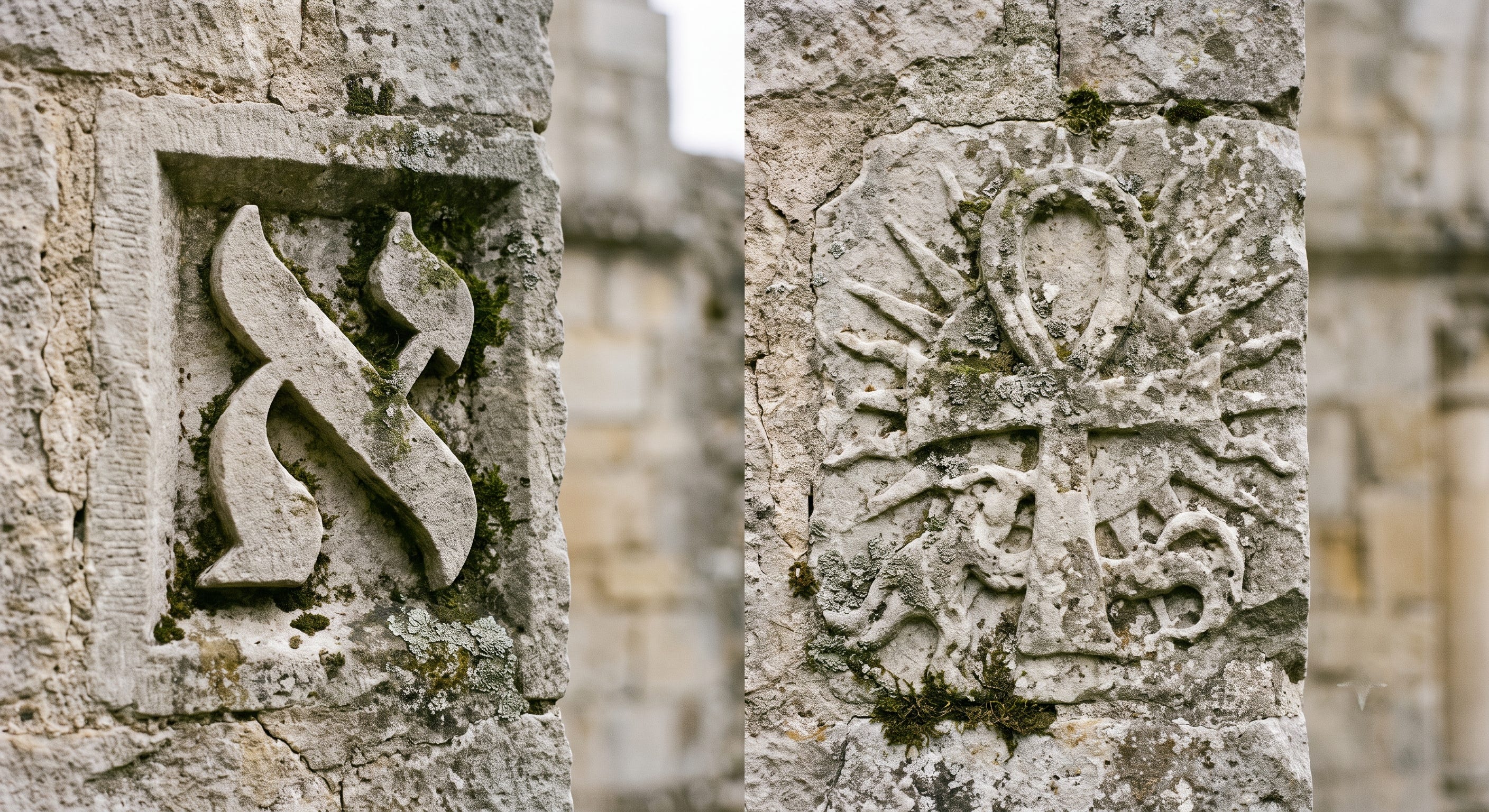
This is more than historical observation; it’s a warning for our walk. The narrow path, as I explored in “The Road Less Crowded,” is defined by its distinctness. When the world’s path and the Kingdom’s path use the same signposts, discernment becomes our most vital skill. We must constantly ask: Does this practice draw me closer to the heart of Yahuah, or does it simply mirror the world’s rhythm with a religious veneer?
The call remains to be set apart. To be holy is to be different. It is to worship a God whose name and nature are distinct, and to live in a way that reflects that distinction, even…especially…when the world has borrowed His vocabulary to sell its own wares.
That is all, and thank you for reading.
From The Archives


If you enjoy Faith In The Fast Lane, I would be incredibly grateful for your support. Consider using one or more of the links below.
You can also find me on other social media platforms using the below links.
On X (formerly Twitter) : Shashue Monrauch on X
On YouTube: Shashue Monrauch on YouTube
On Instagram: Shashue Monrauch on IG
On NOSTR:
Shashue npub1ldn7g28j6rc49gmmyh2yk4z8y688hhuuzgs2v5q2erz784cegshs6427d0
Thanks for your time and support.
Shashue Monrauch